A wrinkled linen bucket hat placed on a dresser, three stacked rings on a finger, a braided belt cinching the waist over a flowing dress: a strong style is often recognized by its details, not by its statement pieces. This season, fashion accessories no longer just complement an outfit. They carry it.
Upcycled and second-hand accessories: the true differentiating lever
Second-hand is often discussed from an ecological perspective. On the ground, the most common motivation among buyers aged 18 to 35 is different: finding a piece that no one else is wearing.
A refurbished bag from the 2000s, a thrifted belt buckle, earrings assembled from dormant stock: these pieces create an immediate visual contrast with a new look from a single brand. The McKinsey x Business of Fashion report on the state of fashion 2024 confirms the notable rise of upcycled accessories in everyday silhouettes.
While browsing the accessories available on Renée Fashion, one can easily spot pieces that lend themselves to this mix-and-match game: pairing a contemporary jewelry piece with a vintage scarf or a bag made from recycled materials results in a more personal outcome than a total catalog look.

The practical tip: before buying a new accessory, check if an archive or refurbished version exists. Returns vary in quality depending on the sellers, but specialized platforms with authenticity checks limit unpleasant surprises.
Bucket hats, belts, jewelry: three trendy accessories to combine without overloading
Stacking all the trendy accessories on the same outfit produces the opposite effect of what is sought. Clarity is lost. The rule that works daily: choose one focal accessory and two discreet complementary ones.
The bucket hat as the central piece
The bucket hat remains a strong marker of the season. Made of thick canvas, crochet, or linen, it alone is enough to give direction to a look. Worn with straight jeans and a plain t-shirt, it captures attention effortlessly.
When the bucket hat is the focal piece, jewelry is minimized: a fine chain around the neck, no large earrings. The bag remains neutral in color.
The belt as a structuring element
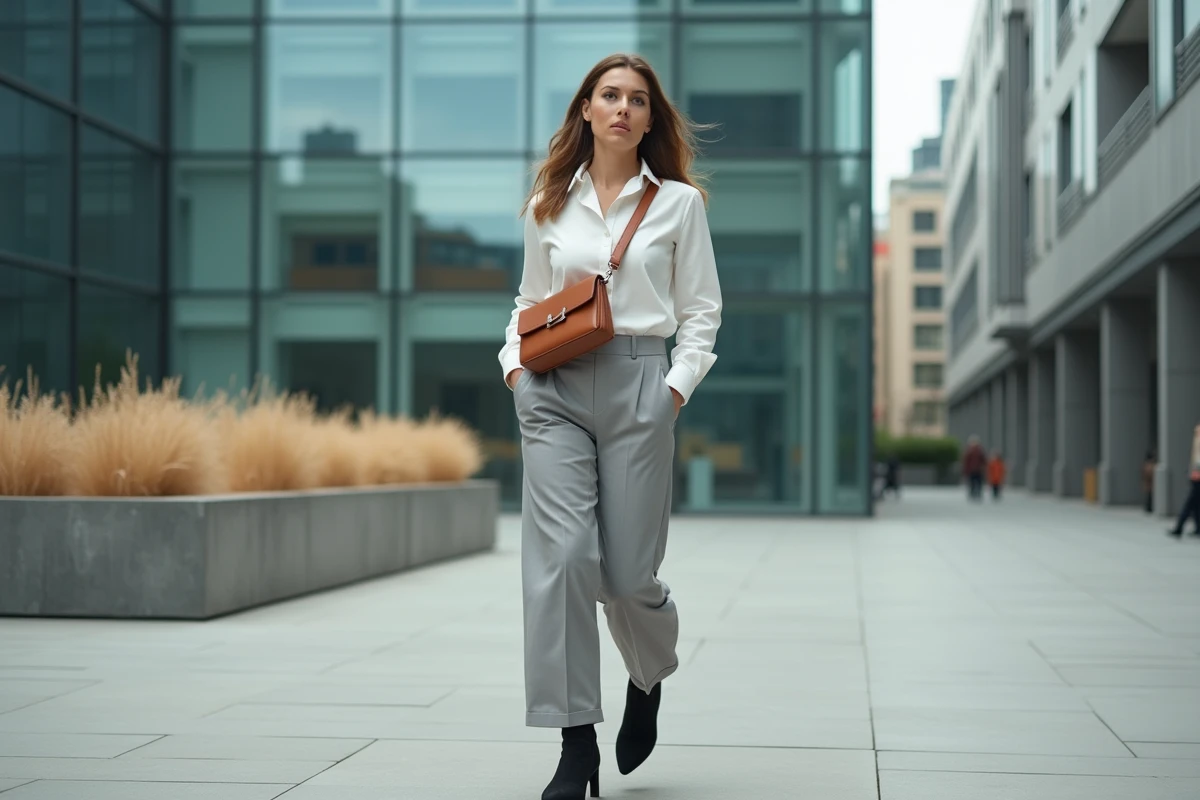
On a midi dress or high-waisted pants worn with a tucked-in shirt, the belt reshapes the silhouette. Braided models or those with intricate buckles work better than a classic thin belt to create a visual anchor point.
If the belt is the strong element, one can afford more prominent earrings (wide hoops, geometric pendants) because the eye moves between two distant areas of the body.
Stacked jewelry as a signature
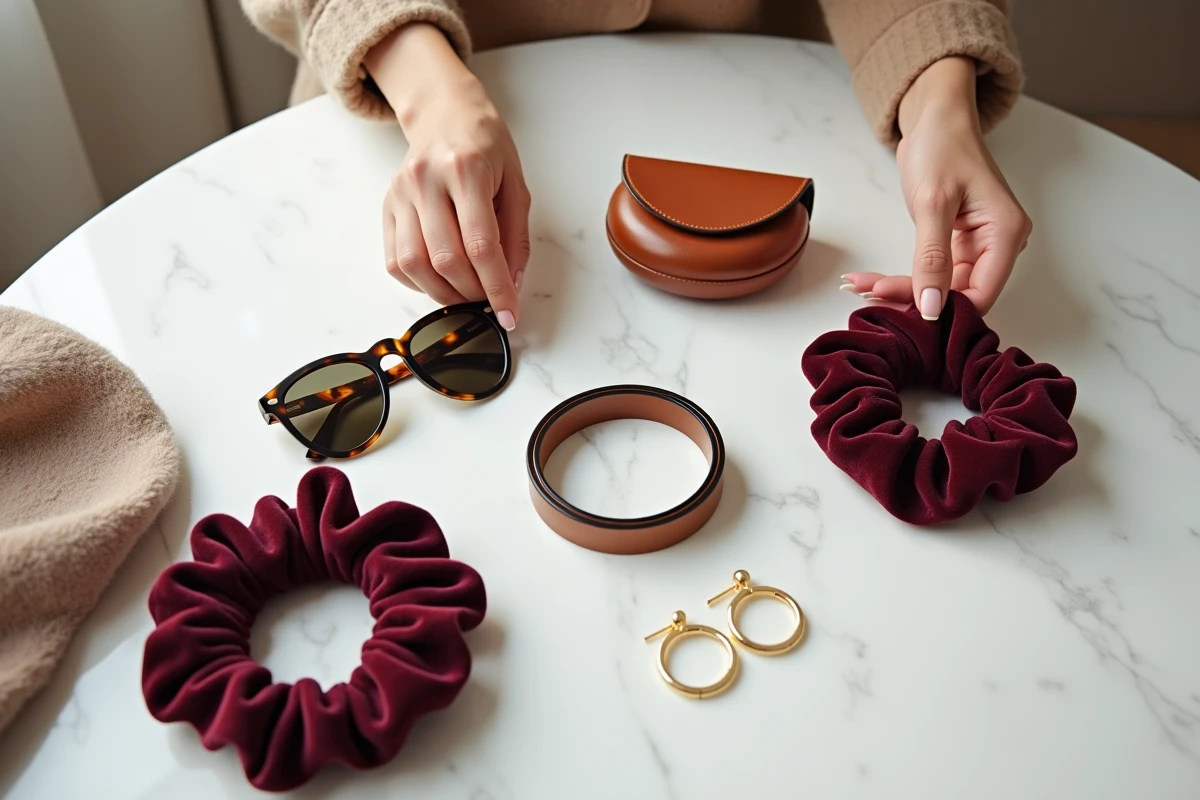
Stacked rings, thin bracelets accumulated on the wrist, necklaces of varying lengths: the accumulation of jewelry works if the metals remain consistent. Mixing gold and silver requires a trained eye. Sticking to one tone simplifies the result.
- Bucket hat or structured hat as the focal piece: discreet jewelry, simple bag, solid colors for the rest of the outfit
- Intricate belt as an anchor point: it allows for bulkier earrings, but avoid long necklaces that compete visually
- Stacked jewelry as a signature: no bucket hat or flashy scarf, the outfit remains clean to let the hands and neckline speak
Connected accessories worn like jewelry: a discreet style code
Activity-tracking rings, cuff-style connected bracelets, and wireless earbuds designed like earrings are no longer reserved for tech enthusiasts. Fashion houses are now integrating them into their lookbooks and runway silhouettes.
The term circulating in the specialized press (Vogue Business, The Business of Fashion) is “quiet luxury tech”: connected objects whose design takes precedence over their apparent function. We wear them because they are beautiful, not because they display notifications.
Specifically, a connected ring in brushed titanium blends into a stack of classic rings. A tracking bracelet in braided mesh merges with a bangle. The idea is not to hide the technology, but to treat it like any other accessory in the composition of a look.
Colors and materials: adapting accessories to the season’s palette
The most worn accessories this season share a common point: textured materials rather than smooth surfaces. Raffia, crochet, grained leather, hammered metal. Texture creates relief and captures light differently depending on the angle, making each piece more visible even in small formats.
On the color side, two approaches dominate:
- Monochrome: a beige raffia bag with a camel leather belt and ochre sandals. The overall look remains soft, with coherence achieved through the color family
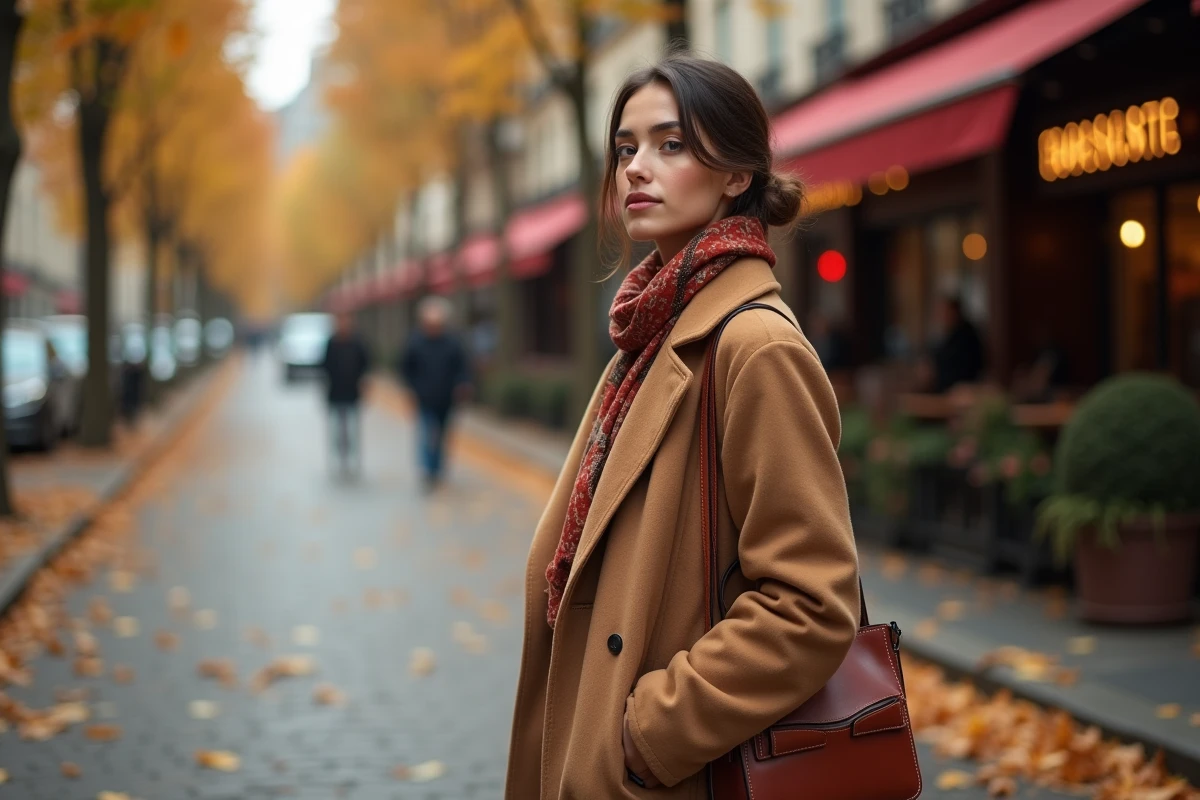
- A single pop of color: a neutral outfit (white, black, gray, navy) highlighted by one accessory in a bold color (red, pine green, cobalt blue). The bag or scarf then becomes the touch that guides the entire reading of the look
- Mixing textures without strong color: combining gold metal, raw linen, and matte leather in the same color range to play on surface contrasts rather than hue
The common pitfall: multiplying bright colors across several accessories at once. The result appears fragmented. One single burst of color is enough to energize a sober silhouette.
This season’s accessories reward precise choices rather than accumulation. An upcycled piece that tells a story, a well-placed bucket hat, a connected jewelry piece that passes for a classic ring: every detail matters more when it is the only one demanding attention.