When renovating a room after insulation work or a change of windows, one often finds themselves with bare walls, lighting that needs to be reconsidered, and furniture that no longer fits the space. It is in this very concrete context that decoration choices become crucial. Transforming your interior with style today relies less on blindly following trends and more on sustainable decisions tailored to the actual configuration of each room.
Raw materials and insulation: when energy renovation dictates interior decor
The tightening of energy performance requirements (Climate and Resilience Law, schedule for banning the rental of energy-inefficient homes) is significantly changing interior decoration. After internal insulation, you lose a few centimeters of floor space and ceiling height. The choice of wall covering and furniture must take this into account.
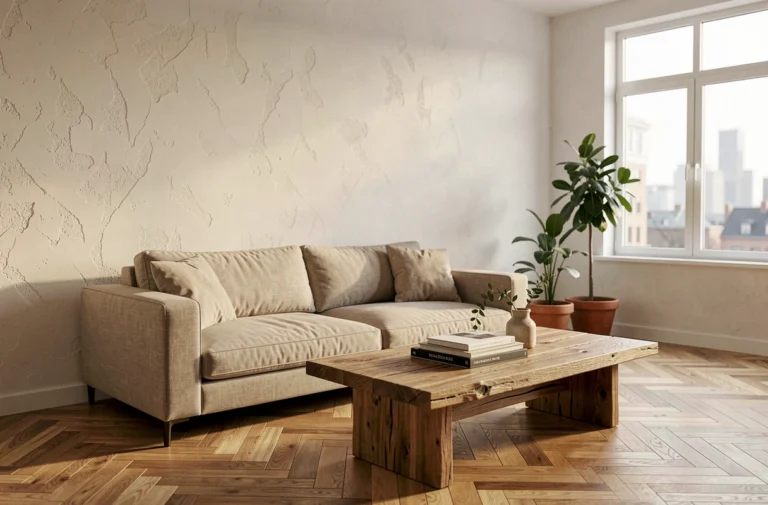
A lime plaster or a low-thickness non-woven wallpaper allows you to maintain usable volume after insulation without sacrificing aesthetics. Natural materials (wood, stone, terracotta) serve a dual purpose here: they regulate residual humidity after work and provide the raw texture found in contemporary interiors. You can explore different layout ideas on Opus Media’s home page to combine decor inspiration with technical constraints.
In an insulated attic bedroom, for example, light pine paneling visually lightens the lowered ceiling. This is both a practical and aesthetic choice.
Slow decoration: buy less to decorate better
French people increasingly claim to prioritize durability and reparability in interior design, at the expense of regular complete makeovers. The market for low-cost decorative accessories is contracting, while durable and multifunctional furniture is faring better.
In practical terms, people no longer buy a set of cushions every season. Instead, they invest in a piece that structures the living room or dining room for several years. A vintage piece that has been reupholstered, a large painting, or a handcrafted light fixture become the focal points of a room, where ten knick-knacks once created visual noise.
How to apply slow decoration room by room
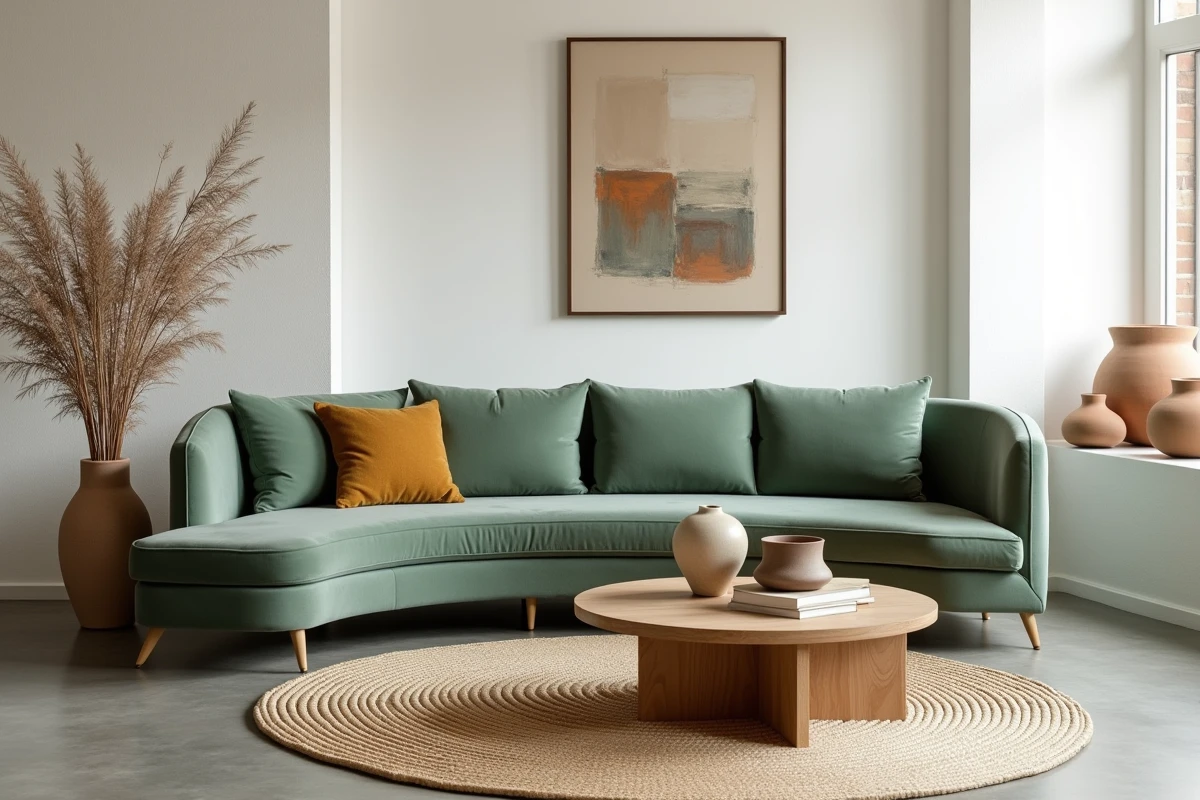
- Living room: a durable fabric sofa in a neutral shade, complemented by a single bold-colored element (armchair, rug, painting) that can be replaced without a complete overhaul
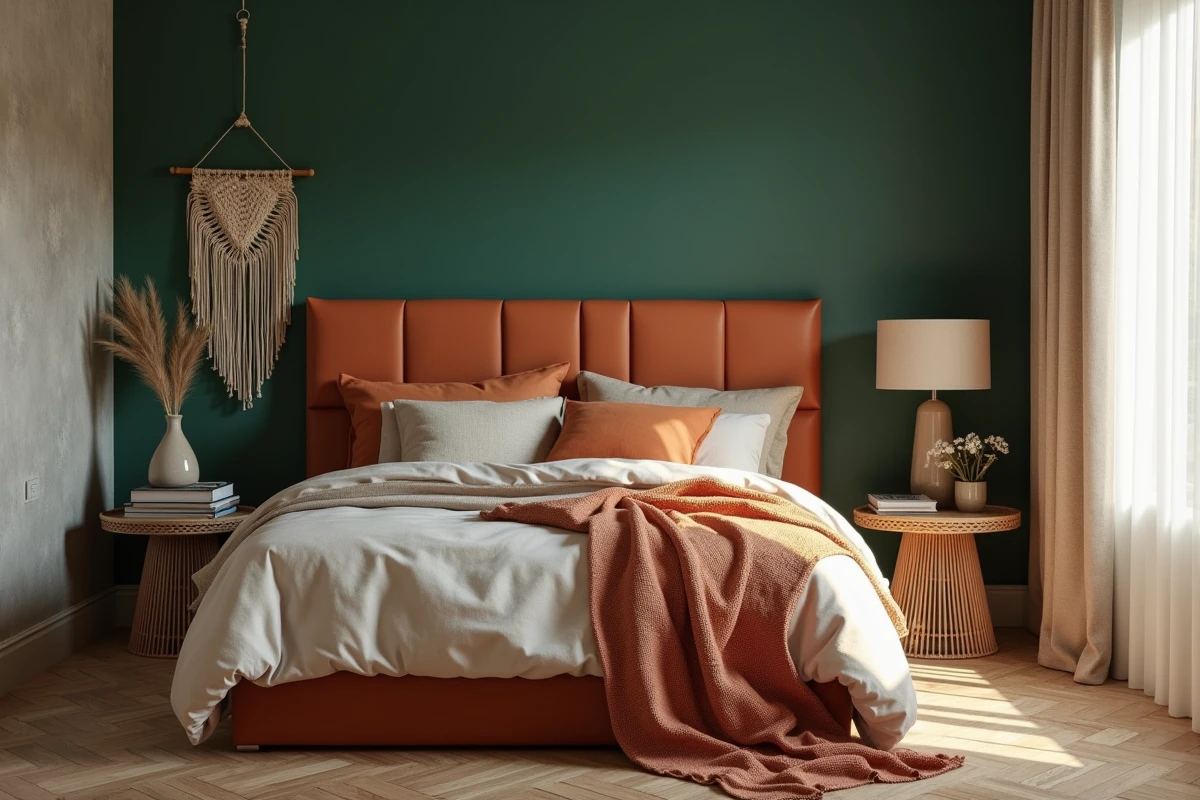
- Bedroom: a headboard made of solid wood or stretched linen, which remains relevant regardless of the bed linen chosen later
- Bathroom: accessories made of stoneware or polished concrete rather than plastic, for a more durable finish and a patina that improves over time
- Entryway: a multifunctional bench (integrated storage, seating, decorative support) that replaces three distinct pieces of furniture
The principle is simple: every decorative object must have a function or a strong aesthetic value, not both in a mediocre version.
Colors and styles: matching shades to the room’s actual light
We see “trendy” palettes everywhere (terracotta, sage green, midnight blue), but their appearance entirely depends on the room’s orientation and the type of lighting. A beautiful sage green in a north-facing living room with a large bay window becomes dull in a west-facing bedroom with a single narrow window.
Before choosing a color, test a sample directly on the relevant wall at three different times of the day. Feedback varies on this point, but there is often a notable discrepancy between the color swatch in-store and the final result on the wall.
Three combinations that work in real conditions
Scandinavian style (white, light wood, soft gray) remains a safe bet in poorly lit rooms: it maximizes the reflection of natural light. For a south-facing interior with plenty of direct sunlight, deeper shades (duck blue, terracotta) absorb excess light and create a more subdued atmosphere.
In a dining room open to the kitchen, a bold color on a single wall structures the space without partitioning it. Avoid painting all four walls in a saturated hue: the result can be visually tiring on a daily basis, especially in living spaces where one spends several hours a day.
Decorating an interior with wallpaper: common pitfalls to avoid
Wallpaper is making a strong comeback in interior decoration, but its installation often leads to frequent disappointments. On an uneven wall (old plaster, repair marks), a geometric pattern wallpaper reveals every flaw. A textured or organic-patterned wallpaper is more forgiving.
- Always apply a primer on a wall painted with acrylic; otherwise, the wallpaper will peel at the seams within a few months
- Plan for extra length for pattern matching: on a wide pattern, the loss can reach a full length per roll
- In humid rooms (bathroom, laundry room), prefer washable vinyl non-woven wallpaper rather than classic paper that can warp when exposed to steam
Panoramic wallpaper on a single wall remains the most effective option for transforming a room without heavy commitment. It should be placed on the most visible wall from the entrance of the room, while keeping the other three walls in a solid tone that picks up a secondary color from the pattern.
In terms of styles, large-scale botanical patterns and material-effect textures (linen, jute, plaster) dominate current catalogs. They add visual depth without overwhelming the space, provided they are not combined with furniture that is already heavily detailed.
Transforming your interior creatively does not require changing everything at once. A wall repainted in the right shade, a piece of furniture repositioned facing the light source, a well-chosen wallpaper on the right support: these targeted interventions create a more significant effect than a hasty total makeover.