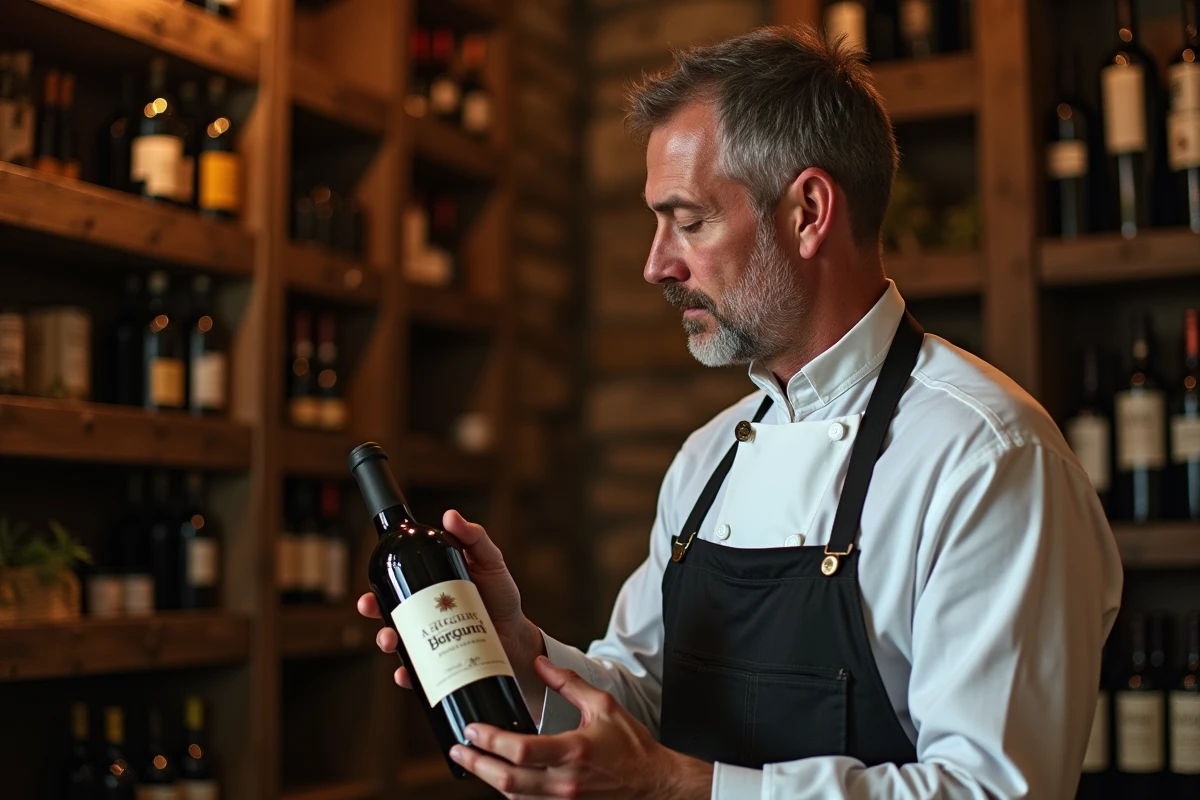
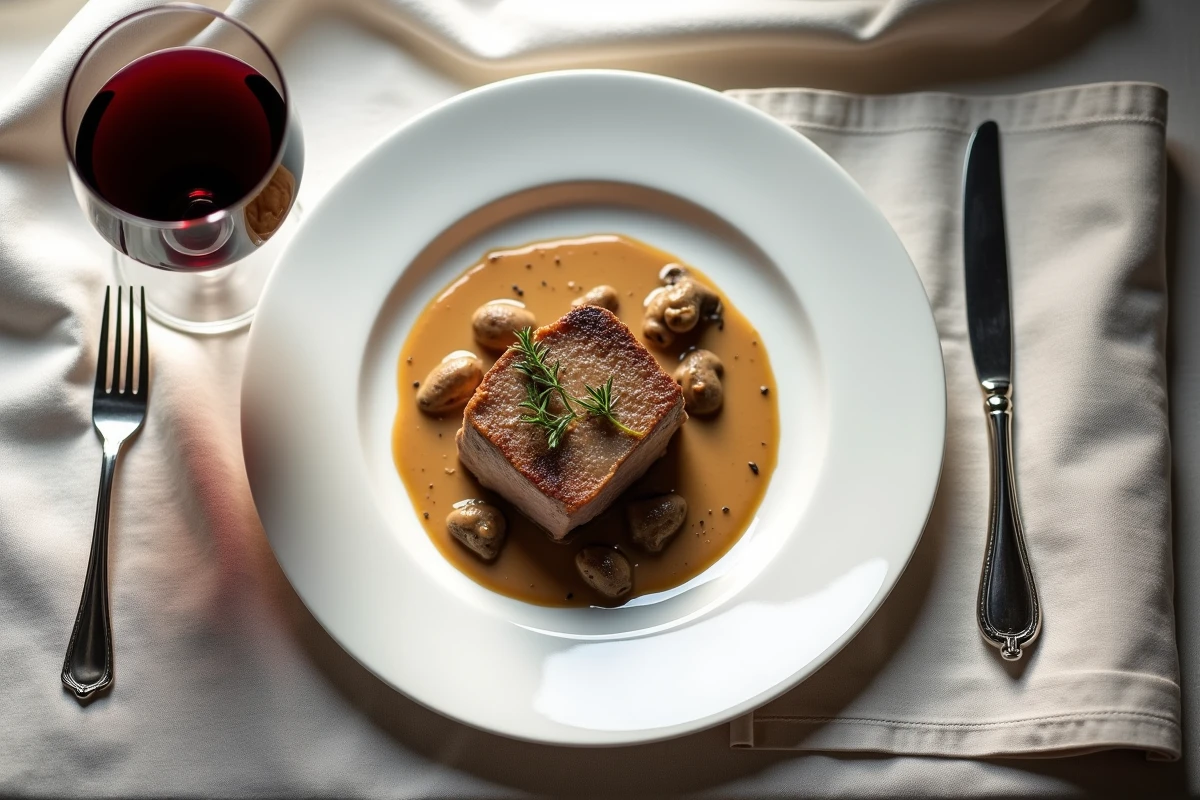
Veal with morels rests on a delicate balance: tender white meat, a creamy sauce, and mushrooms with earthy and woody aromas. The choice of red wine for this pairing must take each of these elements into account, or risk upsetting the dish. The challenge lies less in the grape variety than in the wine’s profile, particularly its tannin level, oak influence, and freshness.
Why the aromatic profile of morels influences the choice of red wine
Morels develop aromas of underbrush, hazelnut, and damp earth. These notes are subtle, easily overshadowed by a wine that is too powerful or too marked by barrel aging. This is why the current trend, echoed by the Revue du vin de France and observed on Michelin-starred restaurant menus, favors very lightly oaked reds, or even unoaked.
Aging in new barrels brings aromas of vanilla, toast, and sweet spices that “overwhelm” the finesse of the morel and the creamy aspect of the sauce. Wines aged in neutral barrels or tanks produce a more harmonious result with this dish.
The creamy sauce adds an additional constraint. Its rich and enveloping texture requires a wine with sufficient acidity to refresh the palate between each bite. A red that is too round, too ripe, or too alcoholic will weigh down the dish instead of lifting it.
To delve deeper into which red wine to pair with veal and morels, the choice of grape variety and terroir remains crucial, as we will see.
Burgundy Pinot Noir and veal with morels: terroir makes the difference
Pinot Noir is the grape variety most often cited for this pairing, and rightly so. Its fine tannins, delicate fruity profile, and aromatic palette (cherry, underbrush, mushroom) resonate directly with the morels.
Not all Burgundy appellations are equal for this dish. Critics Bettane+Desseauve and the Revue du vin de France emphasize that Pinot Noirs from northern terroirs or cooler vintages are better suited to creamy sauces than those from very warm vintages. Recent heatwaves have produced more concentrated and alcoholic wines, sometimes too ripe for the delicacy of veal with morels.
Preferred appellations
- The Hautes Côtes de Nuits and Hautes Côtes de Beaune offer Pinot Noirs at altitude, cooler and less opulent than those from the grand crus of the plains, with an acidic backbone that complements the creamy sauce well.
- A Burgundy red village wine from a domain that works without excessive new oak is a reliable and affordable option, provided you check the type of aging on the back label.
- A Givry or a Mercurey from the Côte Chalonnaise, often lighter than a Gevrey-Chambertin, pairs well with this dish without overpowering it.
The guiding principle remains the same: seek finesse and freshness rather than power.
Alternative grape varieties to Pinot Noir for pairing with veal and morels
Limiting the choice to only Burgundy Pinot Noir would overlook several remarkable options, championed by sommeliers at gastronomic establishments like L’Assiette Champenoise or Le Bristol Paris.
Gamay from Haut Beaujolais
Gamay, grown at altitude in Haut Beaujolais, produces light, fruity wines with vibrant acidity. A Morgon or a Fleurie without oak aging pairs very well with the creamy texture of the dish. The crunchiness of the red fruit enhances the earthy aromas of the morels without masking them.
Trousseau, Poulsard, and Mondeuse: infusion reds
The most notable trend in fine dining restaurants concerns infusion reds from Jura and Savoie. Trousseau and Poulsard, vinified through short maceration, produce pale-colored wines with almost absent tannins and a marked acidic backbone. The Mondeuse from Savoie, in its lighter versions, adds a peppery and mineral character that complements the earthy nature of the morels.
These wines work precisely because their acidic structure and very fine tannins prolong the sensation of freshness against the cream, where a Bordeaux or a southern Rhône might risk saturating the palate.
Serving temperature and mistakes to avoid with red wine for this dish
Even a well-chosen wine can miss the pairing if the serving conditions are not met. Temperature plays a direct role in the perception of tannins and alcohol.
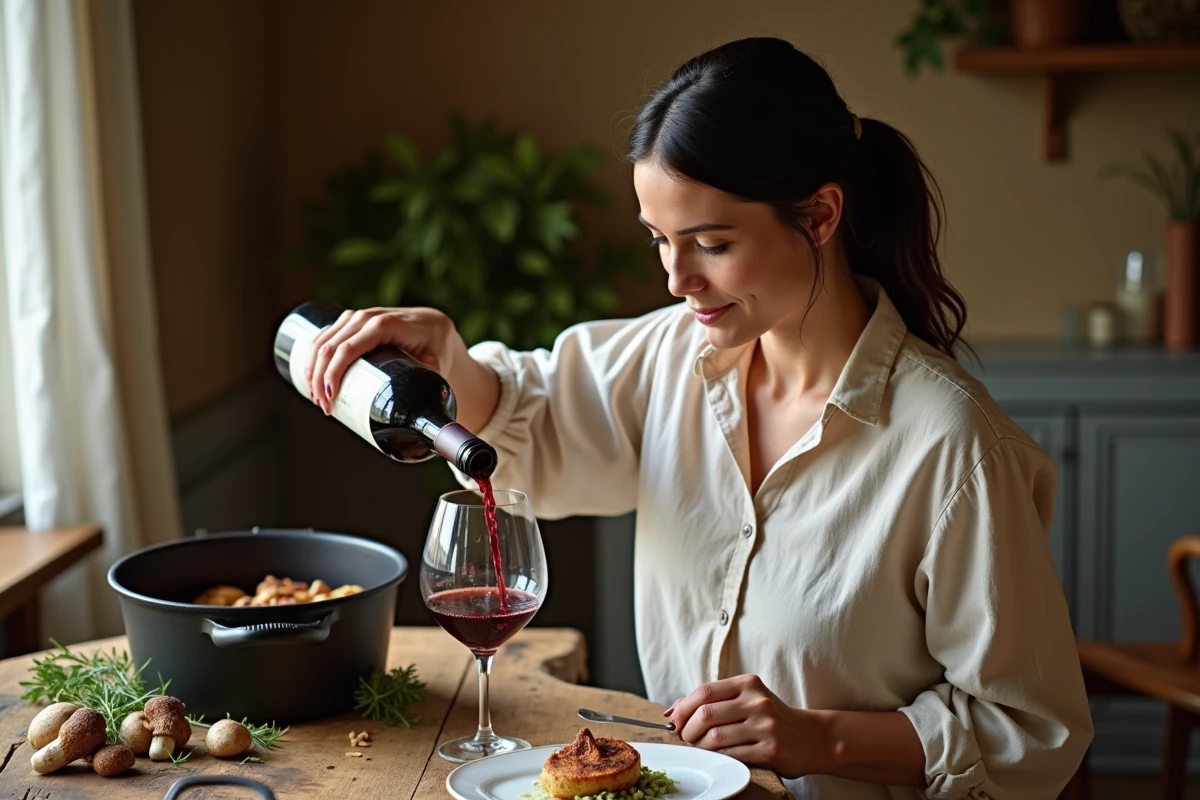
A Pinot Noir or Gamay served too warm (above 16-17 °C) will seem more alcoholic and less fresh. Serving slightly chilled, around 14-15 °C, enhances acidity and reduces alcohol, which strengthens compatibility with the creamy sauce.
Red wine profiles to avoid
- Heavily oaked reds (extended aging in new barrels): their aromas of vanilla and roasting overshadow the morels.
- Very tannic reds (young Cahors, young Madiran, concentrated left bank Bordeaux): their tannins dry out the palate and create a conflict with the creamy texture.
- Reds from very warm vintages with high alcohol content: they overwhelm the finesse of the veal and make the pairing heavy.
Veal with morels in cream remains a dish of finesse. The red wine that enhances it is one that knows how to stay in the background while bringing its own aromatic complexity, echoing the mushrooms rather than competing with them. A lightly oaked Burgundy Pinot Noir, a Beaujolais cru Gamay, or a Jura Trousseau are three solid options, provided you always check the style of aging before opening the bottle.