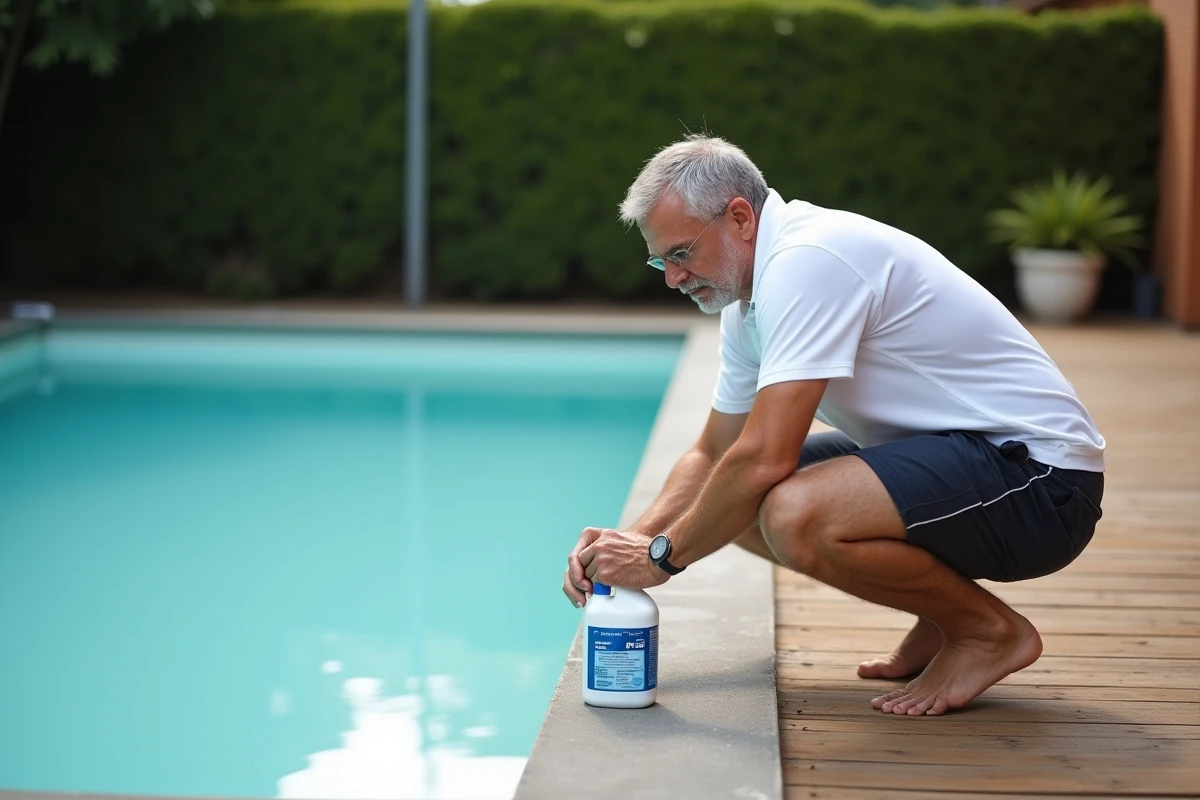
An overdose of pool clarifier is not treated like an excess of chlorine or a pH imbalance. The clarifier works by aggregating particles through cationic polymers: in excess, these polymers saturate the filter media and create a stable colloidal veil that filtration alone can no longer capture. We regularly observe this pattern in field interventions, and the response must follow a precise protocol.
Variable speed pumps and clarifier overdose: the low flow trap
Pools equipped with variable speed pumps account for an increasing share of overdose cases. The mechanism is simple: the owner sets a reduced flow rate to limit electricity consumption. The clarifier, injected at a normal dose, circulates too slowly in the pool. After a few hours, the water remains cloudy.
The user concludes that the product has not worked and adds a second dose, sometimes a third on the same day, before the first could take effect. This is the main cause of overdose that we encounter since the widespread use of these pumps.
A clarifier needs sufficient filtration flow to distribute throughout the pool volume. Before redosing, the pump speed must be increased to its nominal rate and a complete filtration cycle must be waited for. To know exactly what to do in case of pool clarifier overdose, it is essential to first understand this circulation mechanism.
Recovery protocol after pool clarifier overdose
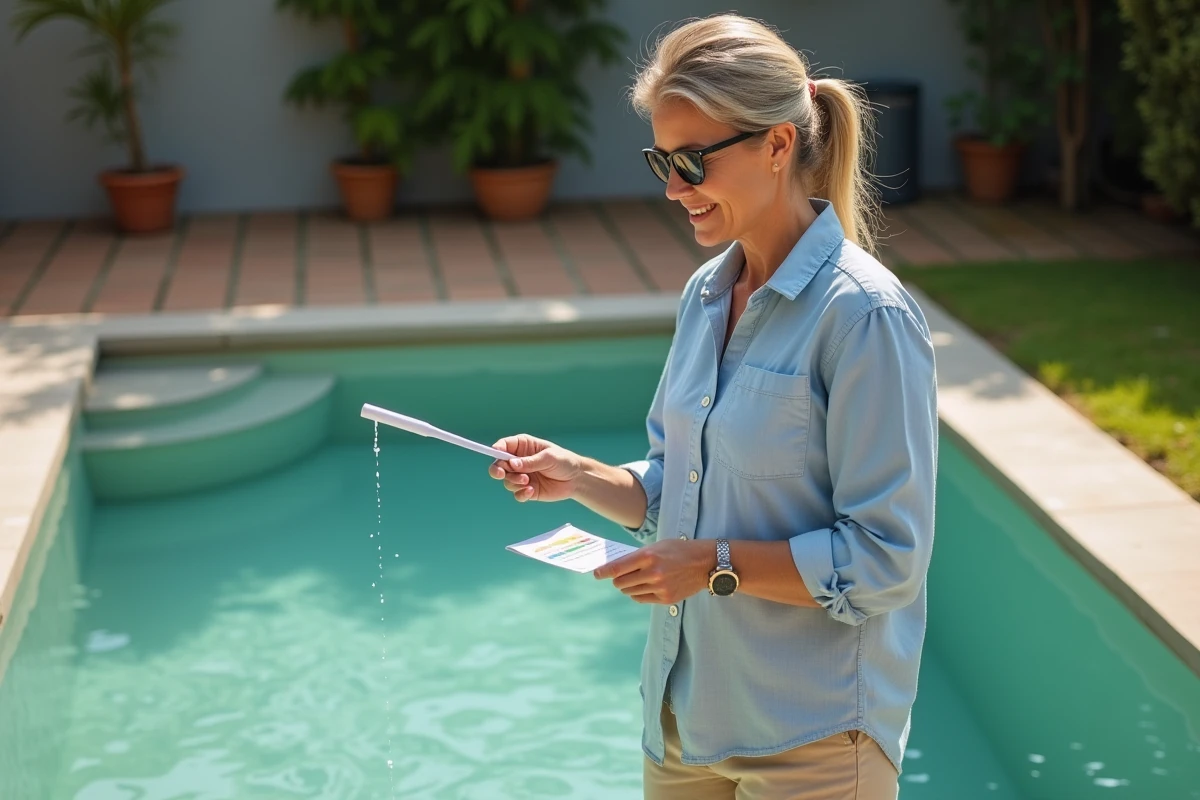
The temptation to drain part of the pool is common. We advise against it as a first step. A partial drain on water saturated with polymers risks abruptly clogging the filter media upon restart, whether it is glass filter or cartridge. The result: a new cloudiness, sometimes worse than the first.
The top priority is to restore the pH between 7.0 and 7.4 before any other action. An excess of clarifier in water with an unbalanced pH forms gelatinous aggregates that clog the filters within hours. Once the pH is corrected, the protocol unfolds in several steps.
- Run the filtration continuously, at nominal speed, for a minimum of 24 to 48 hours without interruption. The excess clarifier gradually adheres to the filter media.
- Clean or rinse the filter (backwash for sand, rinse for cartridge) every 6 to 8 hours during this phase. The pressure on the manometer rises quickly: do not wait for the usual cleaning threshold.
- Disconnect any robot or automatic vacuum connected to the vacuum socket. Surface suction resuspends particle clumps and prolongs turbidity instead of eliminating it.
- Do not add a second chemical product (flocculant, algaecide, shock chlorine) until the water has regained acceptable clarity. The interaction between clarifier polymers and other treatment agents exacerbates clogging.
Special case of cartridge filters
Cartridge filters do not handle clarifier overdose well. The fibers of the media retain the polymers deeply, and a simple jet rinse is not always sufficient. If the cartridge remains viscous after two rinses, soaking for several hours in a filter degreaser is the only solution before putting it back into service.
On a sand filter, prolonged backwashing removes most residues. Glass filter behaves in an intermediate manner: less sensitive to clogging than the cartridge, but more than sand.
Clarifier overdose and saltwater pool: an interaction to monitor
Saltwater pools present an additional risk. An excess of clarifier combined with an unstable pH (common with electrolyzers) can disrupt the electrolysis cell. Polymer deposits on the cell plates reduce chlorine production, prompting the system to compensate by increasing its power or triggering a low flow alarm.

We recommend turning off the electrolyzer during the recovery phase and maintaining disinfection with free chlorine in granules. The cell will be inspected and cleaned once the water has become clear again.
When partial draining becomes necessary
If after 48 hours of continuous filtration with regular filter cleanings, the water remains milky or if the bottom of the pool is not visible, a partial drain (one-third of the volume) becomes relevant. At this stage, the filter media has already captured and evacuated most of the polymers during successive backwashes.
Filling with fresh water dilutes the residual concentration of clarifier. After refilling, systematically rebalance the pH and alkalinity before restarting a normal treatment cycle.
Preventing clarifier overdose: dosing and method
The majority of overdoses stem from a misreading of the instructions or an approximate calculation of the pool volume. A polymer clarifier should be dosed to the milliliter, based on the actual volume of the pool, not on a “visual” estimate.
- Calculate the exact volume of the pool (length x width x average depth) and note this figure in the technical room.
- Always dose with a graduated container, never directly from the can.
- Wait for a complete filtration cycle at nominal flow before judging the product’s effectiveness. For a typical family pool, this represents several hours.
Never redose a clarifier on the same day as the first injection. This reflex remains the number one cause of persistent cloudy water during the season. If the water remains cloudy after a complete cycle, the problem lies with the pH, filtration flow, or filter condition, rarely with a lack of clarifier.
Pool clarifier overdose can be corrected without draining in the vast majority of cases, provided the sequence is respected: pH first, continuous filtration next, frequent filter cleanings, and patience. Draining only occurs as a last resort, after 48 hours without visible improvement.