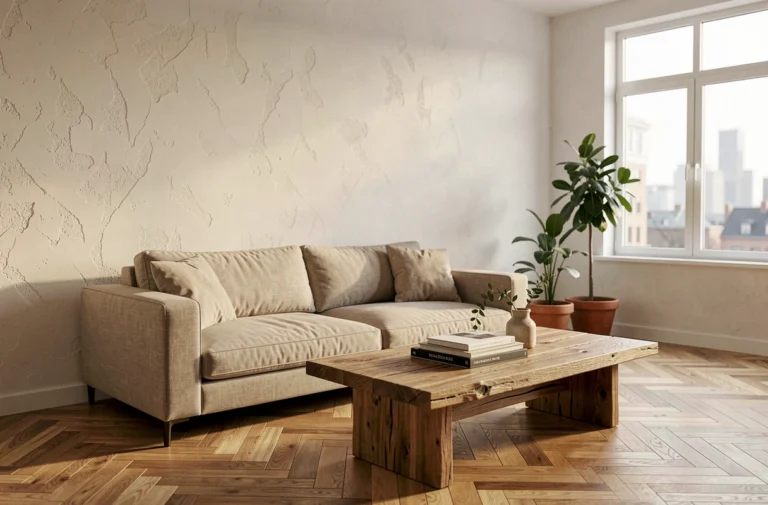
A modern home is no longer just about clean lines and large windows. The connected habitat adds a layer of functionality that changes the way we experience each room, from the living room to the kitchen. Comparing home automation protocols, measuring the real impact on energy consumption, assessing the digital sobriety of devices: this is what separates a truly optimized interior from a mere catalog of connected objects.
Home Automation Protocols for Connected Homes: Ecosystem Comparison
The choice of communication protocol determines the compatibility of devices, their power consumption, and their lifespan. Three standards dominate the residential market, each with very different philosophies.
| Criterion | Wi-Fi (classic) | Zigbee | Matter (new standard) |
|---|---|---|---|
| Typical Range | Good (via router) | Medium (mesh network) | Variable (multi-protocol) |
| Sensor Consumption | High | Very low | Low to moderate |
| Interoperability | Limited (depends on manufacturer) | Good within the ecosystem | Very broad (Apple, Google, Samsung, Amazon) |
| Ease of Installation | Simple | Requires a hub | Simple (automatic recognition) |
| Catalog Maturity | Very large | Large | Rapidly growing |
The Matter protocol, supported by major manufacturers, is becoming the unifying standard. It allows for mixing devices from different brands without lock-in. However, its catalog is still more limited than that of classic Wi-Fi, which leads some households to combine two protocols in parallel.
For an interior design project where home automation structures the design (recessed switches, invisible sensors, integrated lighting), the choice of protocol is made before decoration, not after. Resources like Declic Web’s home page gather concrete ideas to articulate design and connectivity from the outset.

Generative AI Assistants: The Connected Interior is No Longer Limited to Remote Control
Since 2024, Samsung with SmartThings and LG with its “AI home” devices have integrated multimodal generative AI assistants directly into the home ecosystem. The difference from the previous generation of home automation is clear: AI learns the household’s habits and automatically adjusts comfort.
In practical terms, this means that lighting, heating, or ambient music no longer depend on a fixed scenario programmed manually. The system observes routines (wake-up times, time spent in each room, temperature preferences) and then suggests or applies adjustments.
What AI Manages Without Intervention
- Adjustment of brightness and color temperature according to the time and activity detected in the room
- Recipe suggestions and grocery list management based on the contents of the refrigerator (on models equipped with internal cameras)
- Optimization of heating and ventilation cycles based on local weather forecasts, reducing consumption without loss of comfort
- Contextual security alerts (detection of unusual sounds, monitoring door openings in the absence of occupants)
This approach transforms the living room or kitchen into adaptive spaces. Interior design is altered: fewer buttons, fewer remote controls, and a layout where visible interfaces are reduced to a central screen or voice control.
Digital Sobriety in the Habitat: An Overlooked Angle of Connected Design
Multiplying connected objects (boxes, sensors, screens, speakers, NAS) generates a constant power consumption and a volume of electronic waste that is rarely anticipated. ADEME and ARCEP have emphasized for several years the need for sobriety in domestic digital equipment.
The common reflex is to stack gadgets. In contrast, a sober approach starts from the real needs of each room.
Limiting Duplicates and Sharing Sensors
A single presence sensor per zone can control lighting, heating, and the alarm simultaneously. Installing three distinct sensors for these three functions triples standby consumption and the risk of failure.
A durable and repairable device costs less over five years than a gadget replaced every two years. Choosing brands that publish their spare parts and update their firmware over time becomes a criterion for decoration as much as for budget.
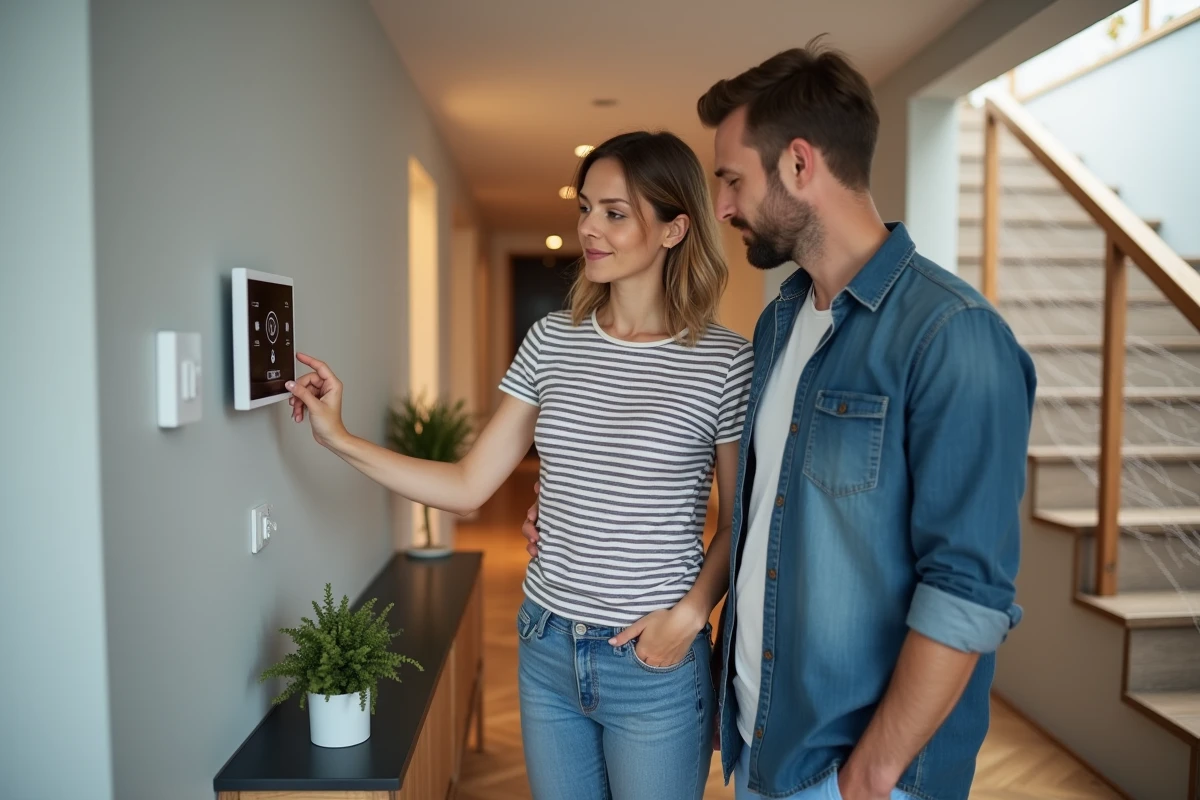
The coherence between modern design and digital responsibility also extends to furniture: a TV stand with integrated cable management and passive ventilation avoids the accumulation of power strips and overheated boxes. This type of detail, rarely mentioned in decoration guides, nonetheless alters the aesthetics of the living room as much as the choice of colors.
Connected Lighting and Interior Design: Concrete Trade-offs
Lighting represents the most visible home automation feature in a room. Two strategies coexist: connected bulbs (simple replacement) and LED strips integrated into furniture or baseboards (permanent installation).
Connected bulbs offer maximum flexibility. You can change color, intensity, and scenario without modifying the electrical installation. Their main limitation remains dependence on the hub or Wi-Fi: a network failure plunges the room into darkness if no physical backup switch is provided.
Recessed LED strips, on the other hand, integrate into the design of the furniture, kitchen, or terrace permanently. They create ambiance effects that are difficult to replicate with traditional bulbs, but their replacement sometimes requires disassembling a piece of furniture.
A common compromise in renovation projects: using connected bulbs in living areas (living room, bedroom) for their flexibility, and fixed LED strips in the kitchen and bathroom where design takes precedence over modularity.
The modern and connected habitat gains relevance when each technical choice (protocol, sensor, lighting) responds to an identified daily use. The best home automation installation is the one that is forgotten, because it works without having to think about it.