
Rituals sells body care products, home fragrances, and cosmetics positioned in the premium segment, with an identity built around rituals inspired by Asian traditions. Identifying competing brands to Rituals requires clarifying what is being compared: the price range, the sensory experience, or the actual composition of the products.
To deepen this overview, the competitors of Rituals according to Espace Beauté provide a useful mapping of the sector’s players. This article focuses on a less frequently addressed angle: the transparency of formulations and the traceability of ingredients, two criteria that have become central since the tightening of European regulations regarding cosmetic claims.
Traceability of ingredients: what separates competing brands from Rituals
European regulations now more strictly govern claims of “natural” or “naturally derived” on cosmetic packaging. This evolution forces brands to justify their claims with verifiable data, rather than simple marketing mentions.
Rituals communicates about the use of naturally derived ingredients in its ranges, with a positioning centered on sensory well-being. The brand does not publish a detailed INCI list for each product directly on its public communication materials, which limits independent verification.
Several competitors adopt a different approach. Aroma-Zone, for example, provides the complete composition of its formulations freely accessible, with the percentage of natural origin calculated according to ISO 16128 standards. This level of detail allows consumers to truly compare what they apply to their skin.
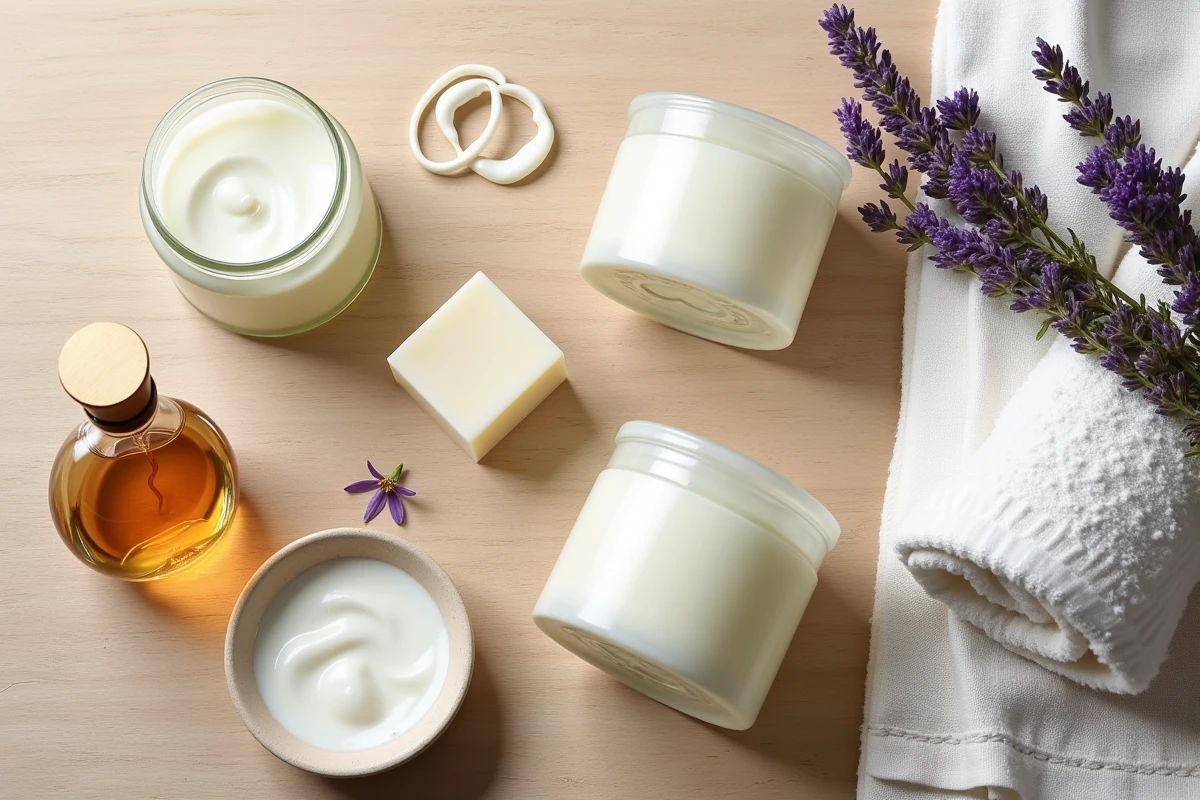
Transparency is not limited to the INCI list. It also includes the geographical traceability of raw materials, obtained certifications (Ecocert, Cosmos Organic, Nature & Progrès), and the publication of independent audit reports. In this area, European direct-to-consumer (DTC) brands have gained an advantage in recent years, as they control their distribution chain and communication without intermediaries.
Premium beauty alternatives: three brand profiles to distinguish
Comparing Rituals’ competitors without categorizing the approaches mixes very different logics. Three profiles clearly emerge in the body care and wellness segment.
Certified natural cosmetic brands
Aroma-Zone and Huygens position themselves on verifiable naturalness. Huygens, based in Paris, formulates its products with a limited number of ingredients and displays the origin of each. Aroma-Zone publishes its complete formulations and natural origin percentages, making it a reference for consumers who are particular about composition.
Premium brands focused on sensory experience
Sabon and L’Occitane occupy a space close to Rituals: scented care, well-designed packaging, physical stores with staging. L’Occitane has a publicly documented supply chain for shea butter and lavender. Sabon focuses more on textures and olfactory combinations, with a positioning less centered on certifications.
Generalist brands with structured CSR policies
Yves Rocher claims a historical botanical grounding and mastery of its production chain through its own crops in La Gacilly. This vertical integration constitutes a traceability lever that few competitors can claim. However, the brand remains in a lower price segment than Rituals, which alters the direct comparison.
“Natural” claims post-2025: how to read cosmetic labels
The tightening of European rules on cosmetic claims changes the game for consumers. Claiming that a product is “natural” without verifiable basis now exposes brands to sanctions. This framework pushes manufacturers to structure their communication differently.
To assess the real transparency of a brand competing with Rituals, several criteria deserve to be verified:
- The presence of the complete INCI list on the brand’s website, not just on the physical packaging
- The display of a percentage of natural origin calculated according to a recognized standard (ISO 16128 or Cosmos reference)
- The explicit mention of third-party certifications (Ecocert, Cosmos Organic, Nature & Progrès) with a verifiable certificate number
- The publication of information about the geographical origin of the main ingredients
A label displayed without a certificate number guarantees nothing. Verification on the certifying body’s website remains the only reliable way to confirm that a brand actually holds the claimed certification.

Rituals facing its competitors: the often-forgotten criterion of sales format
One aspect rarely addressed in comparisons concerns the mode of distribution. Rituals derives a significant portion of its revenue from its own stores and corners in department stores. This physical presence partly justifies the price, as it includes the cost of retail and the in-store experience.
DTC brands like Aroma-Zone or Typology reduce these intermediary costs. The final price then reflects more the formulation than the sales experience. For a consumer primarily seeking quality ingredients, comparing a Rituals product to a DTC product without considering this structural difference skews the analysis.
Typology, for example, displays on each product sheet the number of ingredients, their origin, and their function. This clarity, combined with the absence of a store network, allows for body care products to be offered at a lower price for a comparable, or even superior concentration of active ingredients in certain ranges.
The choice between Rituals and its alternatives thus depends on what one values: the shopping experience and sensory dimension, or the rigor of formulation and transparency regarding ingredients. Both approaches coexist, but they do not meet the same need. Comparing competing brands to Rituals solely based on price or brand image ignores what is actually in the bottle.