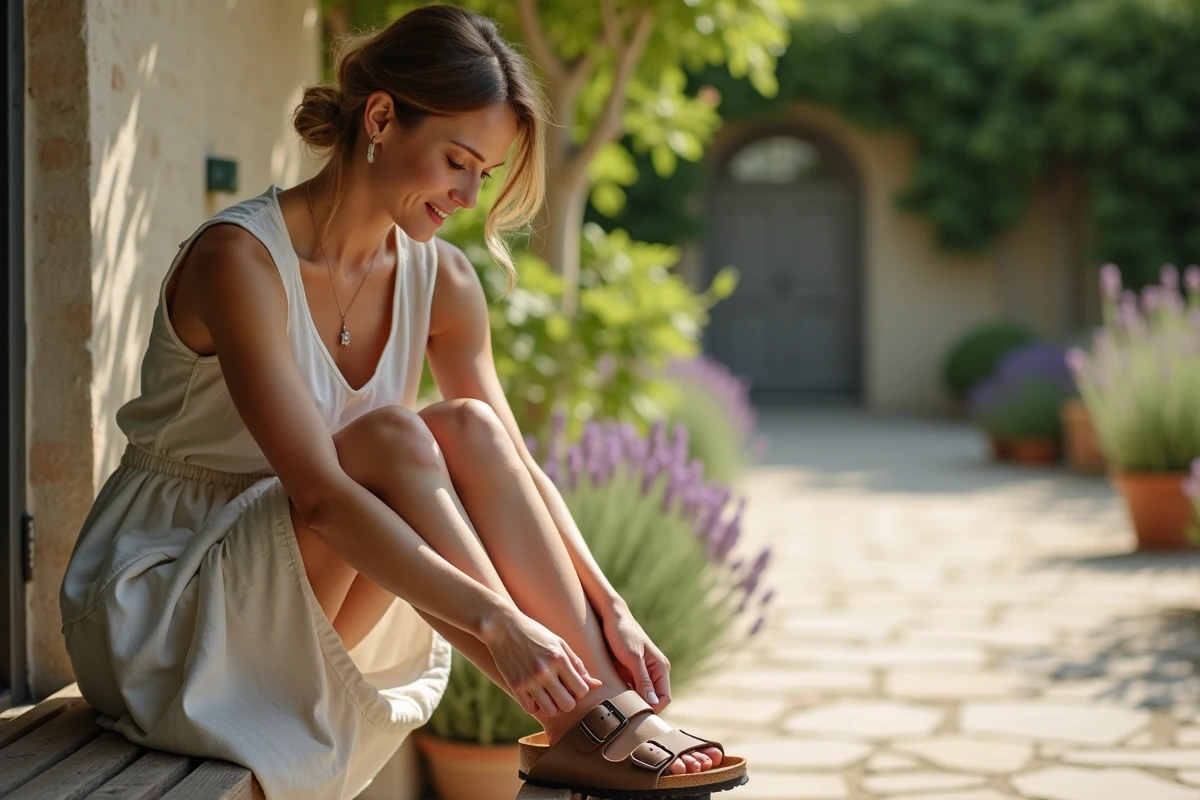
We walk for eight hours standing at a trade show, we go back and forth on the tiles of an open kitchen, we walk across a city during vacation. In each of these cases, the sandals we wear make all the difference. Scholl and Birkenstock consistently come up in conversation whenever we talk about comfortable sandals, but their soles, materials, and support logic have little in common.
Cork sole or memory foam: what the foot really feels
The first contact with a Birkenstock often surprises. The cork and latex sole is firm, almost hard in the first few days. The foot gradually sinks into the material, which eventually molds to the arch of the foot in a personalized way. This break-in period usually takes one to two weeks.
With Scholl, the approach is the opposite. The memory foam offers immediate cushioning, a noticeable softness from the very first step. The comfort is instant, with no adjustment period.
The difference lies in the long term. The Birkenstock cork densifies and retains its shape over several seasons, whereas the Scholl foam tends to compress more quickly under intensive daily use. For someone who wears their sandals every day from June to September, this distinction is significant. When deciding between Scholl or Birkenstock, it’s often this balance between immediate comfort and long-term durability that makes the decision.
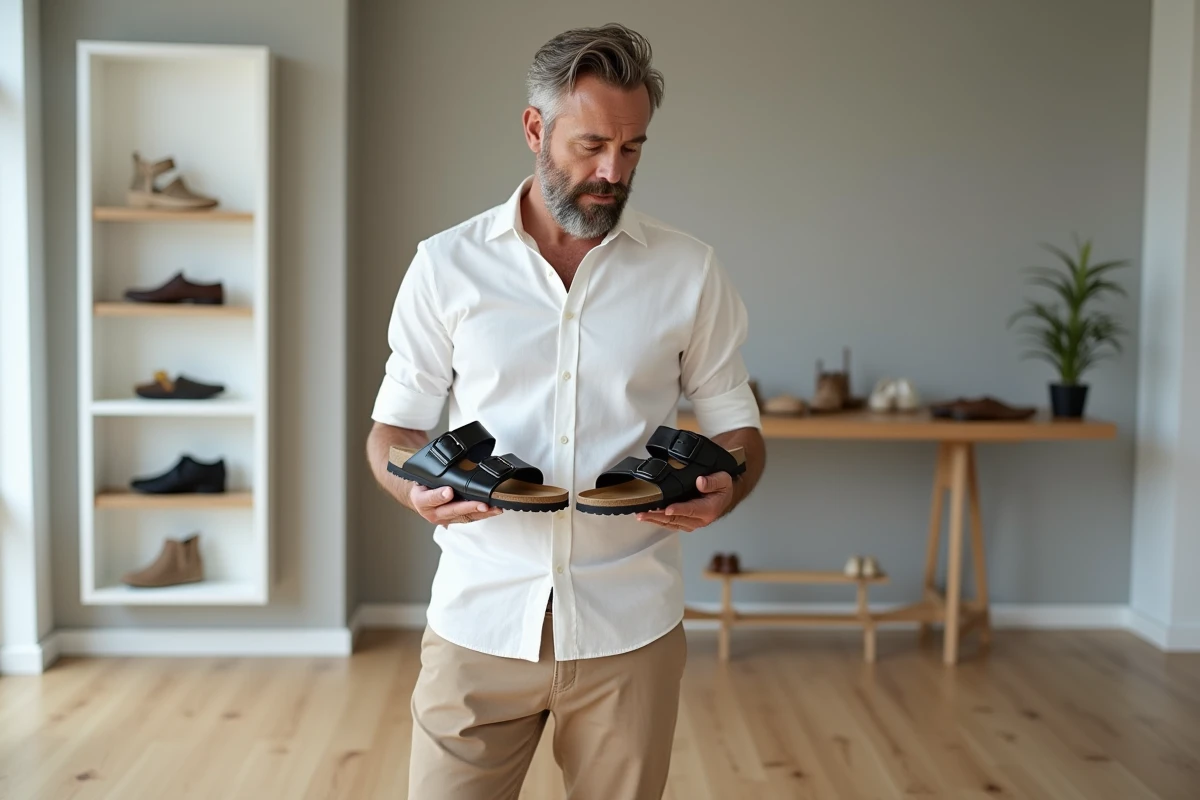
Birkenstock and Scholl sandals facing terrain constraints: heat, humidity, long walks
On a scorching beach, the Birkenstock cork sole remains relatively insulating. The material absorbs little heat compared to a thin synthetic sole. However, the leather of the upper lining takes time to dry after contact with water.
Scholl offers several models with synthetic uppers that dry quickly. For use around the pool or in humid environments, the quick-drying Scholl models are more practical for everyday use.
Extended urban walking
On cobblestones or asphalt for several hours, the relative stiffness of the Birkenstock sole limits foot fatigue. The arch remains supported, and the heel does not compress. This is a clear advantage for days of sightseeing or standing business trips.
The Scholl foam, being softer, absorbs micro-shocks better but allows the foot to rest more flatly over the hours. Feedback varies on this point: some people find the Scholl flexibility more pleasant over short distances, while others experience increased fatigue beyond three hours of continuous walking.
Vegan ranges and solvent-free gluing: a recent selection criterion
Classic comparisons pit leather against synthetic, but the game has changed in recent years. Birkenstock has expanded its vegan-certified models (without leather or animal-derived glue) in its 2024 sustainability report. Scholl, on its part, has been highlighting since 2023 lines using water-based glues to reduce solvent emissions, according to its professional documentation.
This shift responds to European regulations on volatile organic compounds (VOCs). For a conscious purchase, here are the points to check before heading to the checkout:
- The mention “vegan” on the label or product sheet, which guarantees the absence of leather and animal glue in the assembly
- The origin of the cork or foam: Birkenstock uses natural cork, while Scholl favors technical foams whose composition varies by range
- The type of gluing: water-based glues emit fewer VOCs than traditional solvent-based glues
Comfort claims and regulations: what brands can (and can no longer) promise
We still regularly read “orthopedic sole” in the descriptions of Scholl or Birkenstock sandals. Regulation (EU) 2017/745 on medical devices has tightened the rules. Brands are now more cautious about therapeutic claims regarding the correction of flat feet or relief from plantar fasciitis.
Birkenstock has removed from certain versions of its European site formulations that equated its sandals with medical devices. Scholl, historically positioned in the medical field thanks to its podiatrist founder, is also adjusting its communication.
In practical terms, a Birkenstock or Scholl sandal is not an orthopedic device. It offers arch support, heel stability, and a certain degree of cushioning, but it does not replace a custom orthotic prescribed by a podiatrist.
Choosing your sandal based on actual use this summer
The choice between Scholl and Birkenstock depends less on the brand than on the specific situation in which the sandal will be worn. To help make a decision:
- Daily standing use (work, kitchen, retail): the Birkenstock cork sole offers better long-term support
- Occasional outings, short vacations, humid environments: the quick-drying Scholl models with immediate comfort are more suitable
- Ethical sensitivity or leather allergies: check the vegan range of each brand, both now offer them
- Tight budget: Scholl positions its entry-level models at a lower price, while Birkenstock is higher but often offers greater longevity on the sole
Style also plays a role. Birkenstock has gained fashion visibility in recent years, with models adopted well beyond the “comfort” audience. Scholl maintains a more functional image, although the brand has recently diversified its designs.
In the end, it’s not about choosing between two logos. It’s about choosing between a sole that molds to the foot in two weeks and a foam that welcomes from the first minute. Both approaches work, but not for the same feet or the same days.