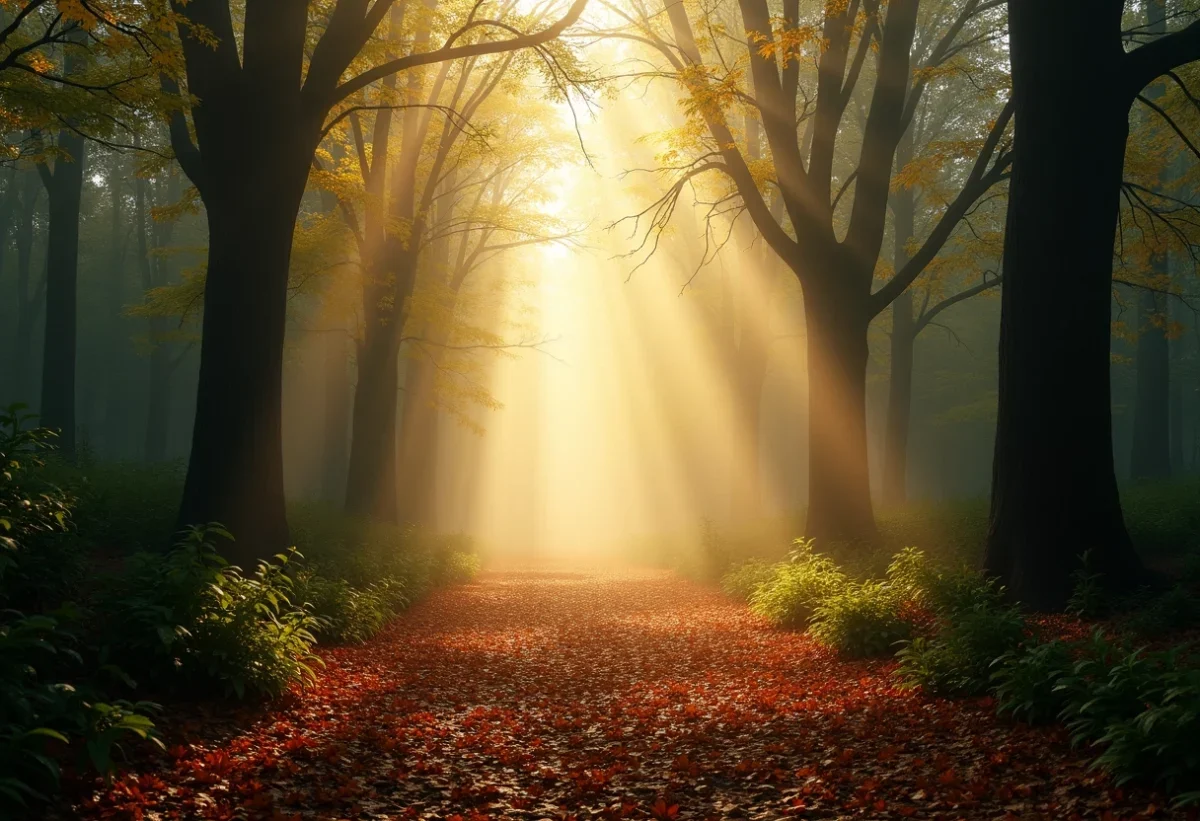
The majestic mountains, winding rivers, and centenary trees have always captivated the human imagination. These natural elements are often perceived as mystical symbols, carrying deep meanings. The flight of an eagle can evoke spiritual freedom, while the blooming of a cherry blossom might be seen as a metaphor for the ephemeral beauty of life.
Ancient cultures and spiritual traditions attributed sacred values to natural phenomena. Lunar cycles, for example, were often associated with fertility and transformation. Today, these interpretations continue to influence our perception of nature and its role in our quest for meaning.
Mystical Interpretations of Natural Elements
The natural elements have always fascinated human beings, inspiring mystical and symbolic interpretations. The Sun, source of light and warmth, controls the weather, the climate, and is essential for plant growth. Ancient civilizations revered it as a god, symbolizing life and renewal.
- The Air, composed of oxygen and carbon dioxide, is indispensable for survival. It represents freedom and movement in many spiritual traditions. The vital breath, or prana, is a central concept in yoga and other meditative practices.
- The Water, constituting three-quarters of the physical matter of nature, symbolizes purification and transformation. In many cultures, it is associated with fertility and regeneration. Water-based purification rituals are common in various religious traditions.
- The Tree of Life is a universal symbol present in various cultures around the world. It represents the connection between heaven, earth, and the underworld. The deep roots of the tree symbolize stability and spiritual growth.
Some interpretations may even seem surprising. For example, the fly, spiritual meaning associated with perseverance and adaptability, shows how each element, even the most seemingly insignificant, finds its place in symbolic thought.
The Earth, made up of rocks, stones, and minerals, is perceived as the nurturing mother. It offers stability and security, symbolizing grounding and fertility. Ancient agricultural rites celebrated this earthly abundance through offerings and rituals.
These symbols, rooted in traditions and myths, demonstrate how nature inspires profound spiritual and philosophical reflection.
Common Symbols and Their Meanings
In cultures around the world, certain natural symbols hold particular significance. These elements are often linked to spiritual beliefs and mystical interpretations.
- Leaf: The leaf is a strong symbol of nature and the cycle of life. It represents growth, transformation, and resilience. The leaf, as it decomposes, nourishes the earth and allows other plants to grow, thus illustrating the eternal cycle of life.
- Flowers: Flowers, with their diversity and beauty, symbolize renewal and fertility. Associated with spring, they embody ephemeral beauty and the fragility of life. Each culture assigns specific meanings to different flowers, reinforcing their role in rituals and traditions.
- Butterfly: A universal symbol of transformation and metamorphosis, the butterfly represents the idea of change and rebirth. It embodies optimism, hope, and the ability to overcome challenges to emerge stronger.
- Humanity: Humanity itself is a symbol of nature. Our existence depends on balance with our environment. Nature provides us with the essential resources for survival, and in return, we have a duty to preserve and respect it.
Among these symbols, the tree of life and the flower of life are two of the most powerful and ancient. They transcend cultures and eras, symbolizing the universal connection between all forms of life and the continuity of existence.