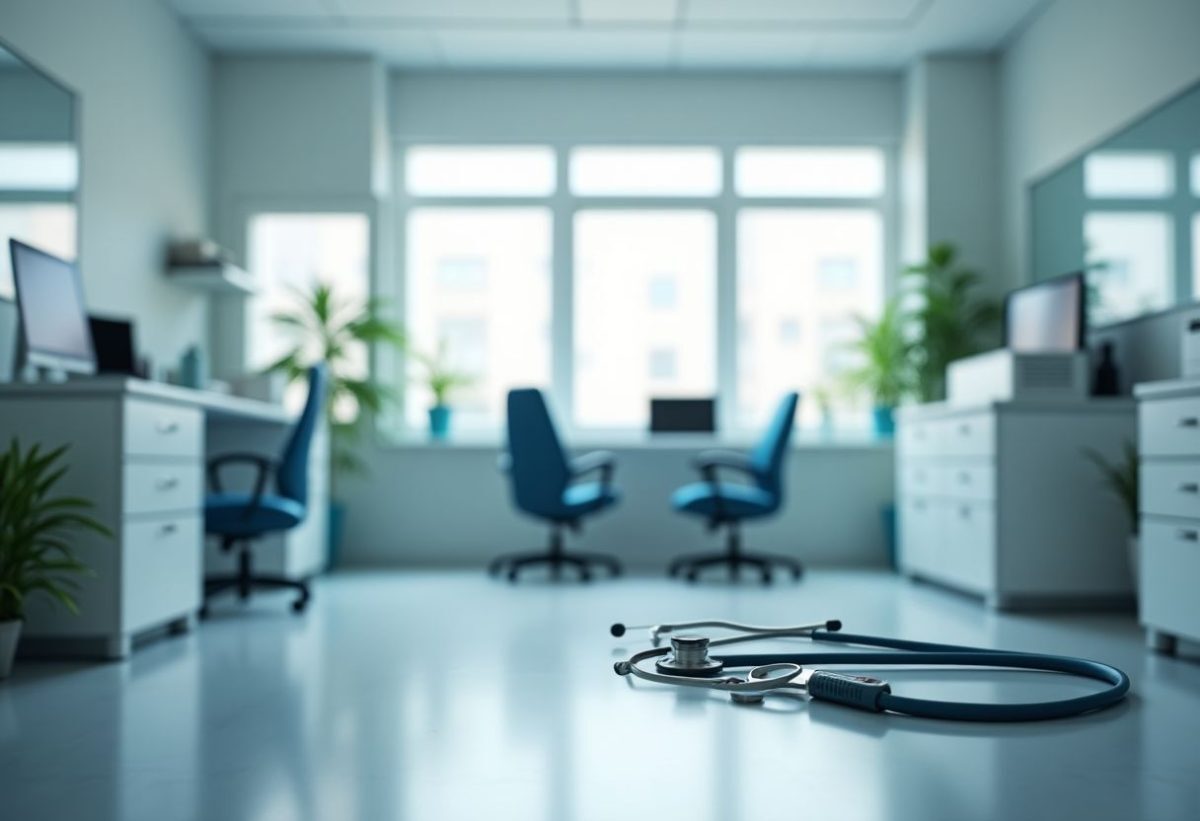
When entering a medical office, it is not only the quality of care that captures our attention, but also the environment in which this care is provided. The layout of a medical office is not a matter of chance. Every piece of equipment plays an essential role, from diagnostic instruments to consultation furniture.
This attention to detail in the choice of materials ensures not only optimal patient care but also an ergonomic working environment for healthcare professionals.
Diagnostic instruments: the heart of the medical office
The precision and speed of diagnosis are the cornerstones of successful care. For this, every medical office must be equipped with high-quality diagnostic instruments.
- Stethoscope: An emblematic instrument, it allows for the detection of internal body sounds, essential for assessing the condition of the heart and lungs.
- Sphygmomanometer: Essential for measuring blood pressure and detecting cardiovascular anomalies.
- Thermometer: Used to check body temperature, a key vital sign.
- Otoscope and ophthalmoscope: Instruments for examining the ears and eyes, respectively, crucial in detecting various conditions.
Furniture and layout: optimized comfort and efficiency
The furniture in a medical office plays a dual role: it must provide comfort to the patient while allowing the practitioner to deliver care effectively.
Examination tables, often adjustable, are essential for facilitating access and comfort during prolonged consultations.
Ergonomic chairs for healthcare staff help minimize fatigue during long hours of work.
All medical office equipment must meet strict hygiene standards, which includes surfaces that are easy to clean and disinfect.
Modern technologies: digital advancement in healthcare
In a world where technology continues to progress, medical offices must adapt to provide superior quality care.
- Computers and management software: They facilitate the management of electronic medical records, allowing for quick and secure access to patient data.
- Digital diagnostic devices: These advanced tools often integrate telemedicine, making remote patient monitoring more accessible.
- Medical imaging: Although generally reserved for larger facilities, portable innovations are emerging, making ultrasounds and other imaging more affordable for smaller practices.
Medical consumables: not to be underestimated
Medical consumables, although ephemeral by nature, are absolutely necessary to ensure continuous and quality care.
Sterile gloves, dressing pads, and bandages are basic elements, always present to ensure hygiene and protection during each procedure.
Syringes and needles, often used for drawing or administering substances, are also essential.
The supply of these consumables must be regular and sufficient to avoid any shortages that could affect the smooth operation of the office.