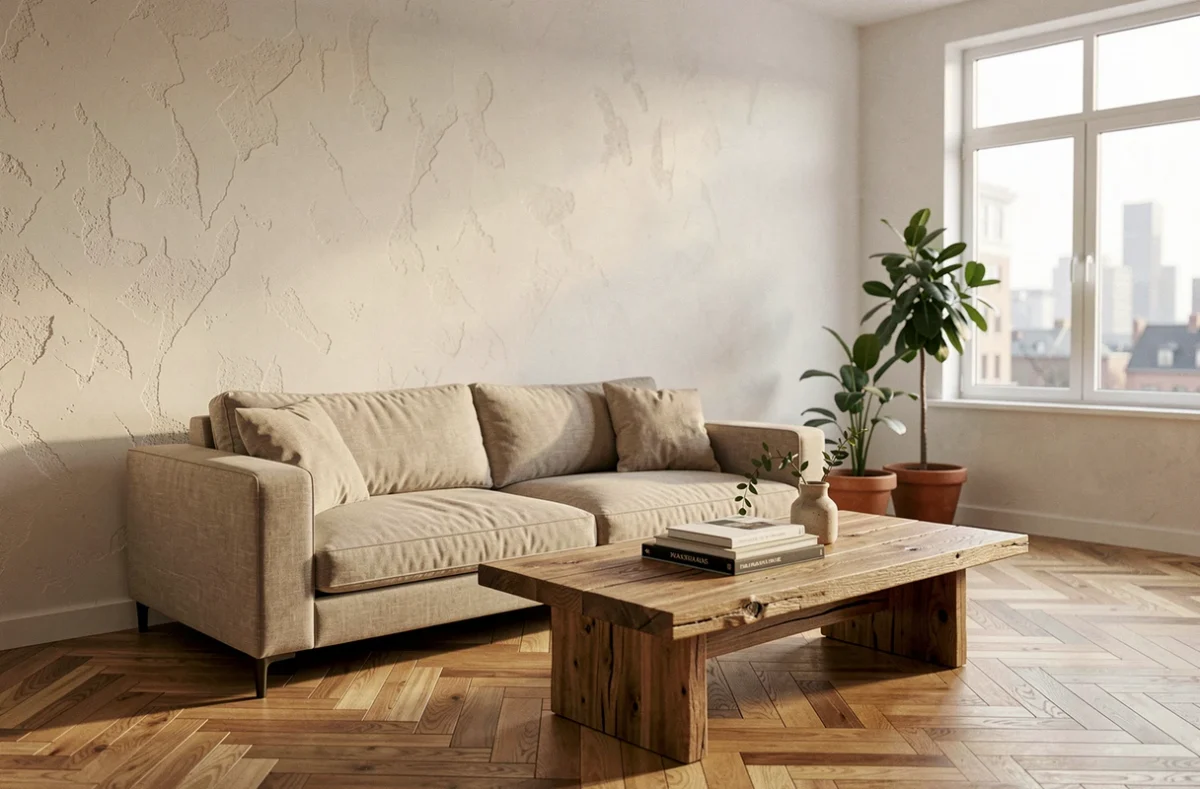
A room can tick all the boxes of current style and still be unpleasant to live in. The opposite is also true: a modest interior, well thought out on a few specific points, provides an immediate sense of comfort. Transforming your home into a modern and warm space does not come from a list of decorative shopping items, but from choices that affect how we physically feel in each room.
Summer thermal comfort: the forgotten angle of a modern home
Have you ever noticed that a perfectly decorated living room becomes unlivable as soon as the first heat waves hit? According to data published on data.gouv.fr in October 2026, 45% of recent energy performance certificates classify summer comfort as insufficient. In other words, nearly half of the diagnosed homes do not properly protect their occupants from heat.
The energy performance certificate indicator evaluates solar protections, roof insulation, thermal inertia, the cross-ventilation of the home, and the presence of fixed air circulators. It does not take into account the local climate. An apartment in Lille and a house in Montpellier can receive the same rating, even though their needs differ radically.
Before choosing a wall color or a sofa, check these concrete points:
- Do the south and west-facing windows have external solar protections (shutters, sunshades)? An interior blind allows most of the heat to pass through
- Is the ventilation cross-ventilated, meaning can air circulate from one facade to the other? Without this, no air circulator is sufficient to cool a room
- Is the roof insulation effective? In summer, poorly insulated roofs turn attics into ovens, and heat gradually descends to the lower floors
Addressing summer comfort first ensures that the warm atmosphere we create in winter does not become stifling in July. It is also an investment that adds value to the property during resale or a new energy performance certificate.
To explore interior design ideas suitable for each type of home on the Espress Home website, navigating by room allows for quick targeting of priority areas.
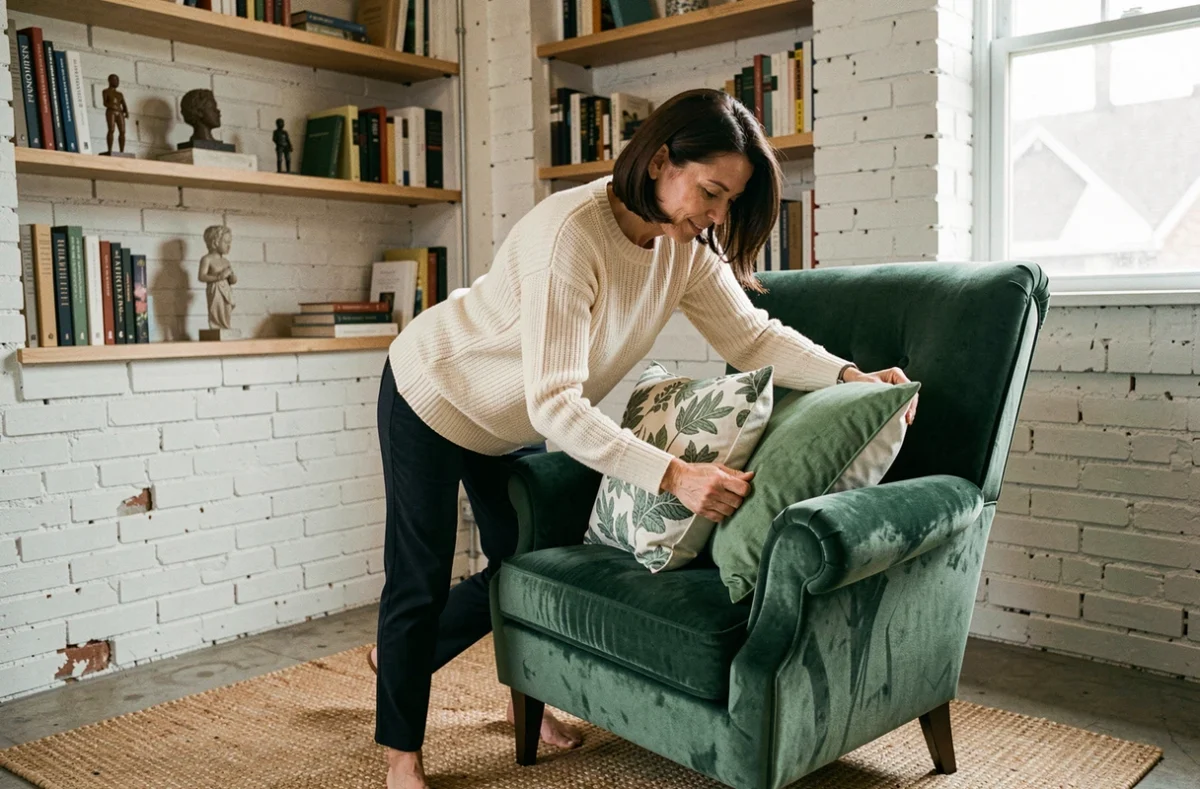
Raw materials and neutral palette: creating warmth without overloading
Wood, linen, boucle wool, handmade ceramics: these materials appear in all decorative articles. Their real interest lies not in a trend, but in a physical property. Porous materials absorb sound and regulate humidity, two factors that directly influence the sense of comfort in a room.
A solid oak or thick stoneware floor does not produce the same echo as a thin, smooth tile. A sofa covered in washed linen does not reflect light in the same way as a shiny synthetic fabric. These differences, often imperceptible in a photo, are felt daily.
Combining textures without falling into accumulation
The classic trap is to multiply materials to “warm up” an interior. Three well-chosen textures are sufficient in a living room. For example: a thick wool rug on the floor, a matte fabric sofa, and a raw wood coffee table. The rest (walls, lighting, shelves) benefits from remaining neutral.
Limiting the palette to two or three natural tones (off-white, beige, warm gray) avoids visual saturation. Bold colors work better in small touches: an ochre cushion, a terracotta vase, a framed poster. The space breathes when each colored object has room around it.
Natural light and artificial lighting: two distinct subjects
Many decor tips treat light as a single block. In practice, natural light and artificial lighting present different issues and require separate responses.
Increasing daylight
The primary source of visual comfort remains the window. Before buying a lamp, observe what blocks light in each room. A tall piece of furniture placed against a window, opaque curtains drawn during the day, dirty glazing: these details reduce brightness more than we imagine.
Clearing openings, opting for light drapes, and placing a mirror facing the light source are three free gestures that change the atmosphere of a room in minutes.
Layering lighting
A single ceiling light is the enemy of a warm living room. It lights uniformly, without relief, and strains the eyes in the evening. A pleasant room combines at least three light sources placed at different heights.
- A floor lamp near the sofa, with a fabric shade that diffuses light without glare
- A low pendant light above the dining table, visually defining the dining area
- One or two accent light points (console lamp, discreet garland, candle) that create intentional shadow areas
Shadow is as important as light for producing a sense of warmth. Too homogeneous lighting flattens volumes and gives the room a clinical appearance.
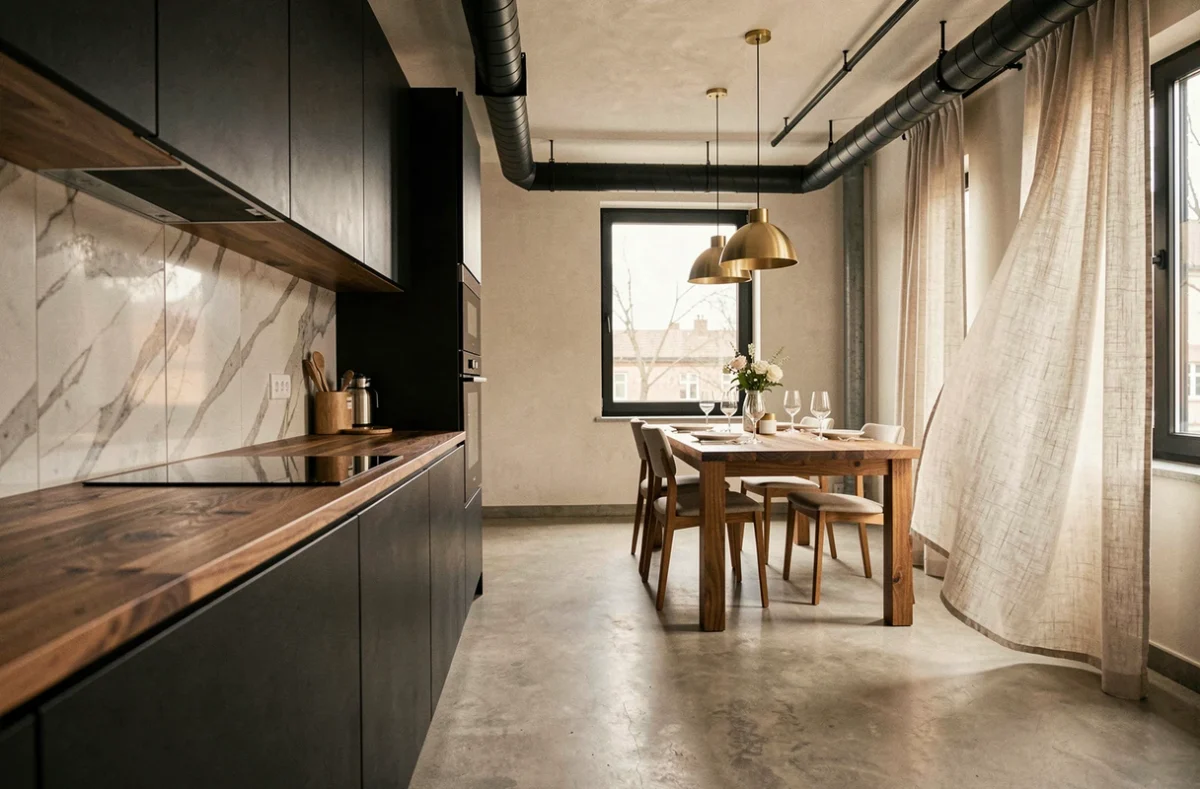
Furniture and circulation: rethinking the layout before buying
Changing furniture is expensive. Moving it costs nothing. Before any purchase, test a new arrangement for a week. The results are often surprising.
A sofa pulled away from the wall by a few centimeters creates a circulation corridor behind it and gives the impression that the room is larger. Orienting the seating towards a focal point (fireplace, large window, bookshelf) naturally structures the space and invites sitting.
In small rooms, multifunctional furniture frees up floor space. A bench with integrated storage, an extendable table, or a fold-down wall desk help keep the surface clear. The empty space between furniture contributes to the atmosphere as much as the furniture itself.
The modernity of an interior is not measured by the number of new objects it contains. It lies in the coherence between materials, light, circulation, and real physical comfort. A project that starts with thermal comfort and layout, before decoration, produces a more durable and pleasant result to live in through the seasons.