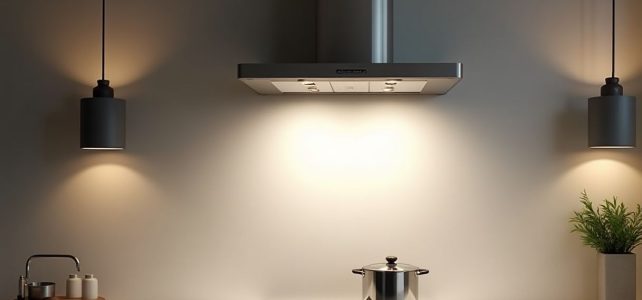
In the culinary world, the quality and efficiency of equipment play a fundamental role in ensuring a top-notch dining experience. Among the essential elements of a professional kitchen, the extraction hood stands out for its importance in maintaining a clean and healthy environment. Industry professionals know that the hood is indispensable for evacuating the vapors and odors released during cooking. For those seeking a flexible and adaptable option, the motorless hood proves to be a wise choice. This type of hood is particularly appreciated for its unique features and specific advantages. It allows chefs and restaurateurs to tailor the extraction system to their exact needs while optimizing space and resources.
What is a motorless hood?
Understanding the specifics of a motorless hood is essential for making an informed choice. This type of hood is distinguished by the absence of an integrated motor, which offers increased flexibility during installation.
A motorless hood is essentially a structure devoid of an integrated suction system. It is designed to be connected to an external motor, often placed at a distance to minimize noise in the kitchen. This allows for the selection of a motor tailored to the specific needs of your establishment, whether it concerns suction capacity, location, or noise level.
The flexibility it offers is particularly valuable in professional environments where every detail matters. Furthermore, it helps reduce ambient noise, as the motor can be installed in a technical space away from the cooking area, creating a more pleasant working environment for kitchen staff.
The advantages of a motorless hood
Choosing a motorless hood presents several notable advantages that make it a preferred option for professional kitchens.
- Customization: Thanks to the absence of an integrated motor, it is possible to choose a motor that exactly matches the needs of your establishment. This includes suction capacity, energy consumption, and noise level.
- Noise reduction: By installing the motor at a distance, noise is significantly reduced in the kitchen, improving acoustic comfort for employees.
- Adaptability: The hood can be integrated into different types of kitchen architectures, offering greater design flexibility.
- Ease of maintenance: Without an integrated motor, the maintenance of the hood is simplified, reducing the time and costs associated with it.
How to install a motorless hood?
Installing a motorless hood requires careful planning and precise execution. The installation must be carried out with several key factors in mind.
- Choose the right location for the hood, generally above the main cooking points.
- Determine the ideal location for the external motor, considering the distance from the hood and the necessary acoustic insulation.
- Ensure that the ventilation system is properly sized to guarantee effective evacuation of smoke and odors.
- Entrust the installation to a professional to ensure full compliance with safety and performance standards.
The ideal applications for a motorless hood
Motorless hoods are particularly suited to certain environments and types of establishments. Their flexibility makes them a strategic choice.
Large-scale professional kitchens, such as starred establishments, hotels, and caterers, find significant advantages in using this type of hood. The ability to customize the extraction system according to the size and volume of the kitchen is a major asset.
Moreover, open kitchens, where calm and aesthetics play an essential role in the customer experience, benefit from noise reduction and the discreet integration of the hood.